
Cupressus macrocarpa (Monterey Cypress)
Cupressus macrocarpa, recently renamed Hesperocyparis macrocarpa, is commonly known as Monterey Cypress. It is a large, evergreen tree with a narrow, conical shape when it´s still young but gradually developing a more irregular form with spreading, horizontal branches as it matures, especially in areas with harsh coastal winds.
Its vibrant yellow-green to dark-green foliage, with a lemony fragrance, is composed of tiny scale-like leaves flattened against the twigs. The twigs are arranged in a spray-like pattern that gives the tree a delicate, lacy appearance. As a final touch, the tree is adorned with round cones.
The bark is very attractive in mature trees. It peels away to reveal inner layers that transition from grey to reddish-brown. Monterey Cypress can also develop multiple distorted trunks, forming a spectacular living sculpture.
It is a hardy, drought-tolerant tree native to the central coast of California, specifically to the Monterey Peninsula, hence its common name Monterey Cypress. However, its striking form, resilience, and low-maintenance nature make it popular in gardens and landscapes around the world.

Quick Overview
TYPE

HEIGHT & WIDTH

BLOOM TIME
SUNLIGHT

HARDINESS

DROUGHT TOLERANCE

ORIGIN

Monterey Cypress Botanical name
- Botanical name: Cupressus macrocarpa (ku-PRES-us mak-roh-KAR-puh)
- Family: Cupressaceae (koo-preh-SAY-see-ee)
- Common name: Monterey Cypress
- Synonyms: Callitropsis macrocarpa, Hesperocyparis macrocarpa (most recent classification)
| Name | Meaning |
|---|---|
| Cupressus | Derived from the Greek word “kuparissos” referring to cyprus trees. It may also be associated with the myth of Kyparissos, a young man transformed into a cypress tree by Apollo. |
| macrocarpa | Is a combination of two Greek words: makros, meaning “large”, and karpos meaning “fruit”. This refers to the relatively large cones produced by this species compared to other cypresses. |
How to identify Cupressus macrocarpa
Plant
Cupressus macrocarpa is a large, evergreen conifer that is often multistemmed. The reddish-brown to grey bark develops shallow furrows, peeling in scaly plates to reveal reddish inner layers.
Its spreading horizontal branches form a broad, irregular crown, especially in windy coastal areas. Over time, the crown tends to flatten at the top, and the trunk becomes twisted and bumpy, taking on its distinctive windswept look.
When the tree is young or grown in a woodland close to other trees, it has a narrow, cone-like shape and looks very different from its natural mature form.
Its dense, yellow-green to dark green foliage consists of scale-like needles arranged in thick sprays. The tree is dotted with small, greenish-brown cones that remain on the tree until the right conditions allow them to open and release seeds.
It is a fast-growing tree and can live for hundreds of years.
The size of this cypress is, on average, 12 – 21 m (40 – 70 ft) high and 6 – 24 m (20 – 80 ft) wide. However, when cultivated in climates outside its natural habitat, it keeps a more upright form and rarely grows larger than 12m (40ft) in height and 10m (33ft) in width.

Stem
The stems of Cupressus macrocarpa branch from the bottom of the trunk (s) with a few major limbs near the ground and becoming denser and thinner towards the top. They are cylindrical and slightly grooved, and their colour varies between grey and reddish brown.
The branches progressively subdivide into alternate shoots that radiate in all directions, creating three-dimensional sprays that give the tree its distinctive texture and appearance.
The twigs are covered by tiny, flat, scale-like leaves arranged in opposite pairs, alternating and overlapping along the length of the twig, creating a quadrangular or cylindrical “needle.”

Leaf
The leaves are scale-like and can vary from yellow-green to dark green. They are oval-shaped with blunt tips.
The size is around 2 to 5 mm, so small that individual leaves are difficult to see. What we can easily see is the overall pattern they form:
The leaves overlap and are tightly arranged in alternating opposite pairs. They are pressed closely against the twigs, resulting in a “needle” with a cylindrical form. When crushed, these needles release a strong lemon scent.

Flower
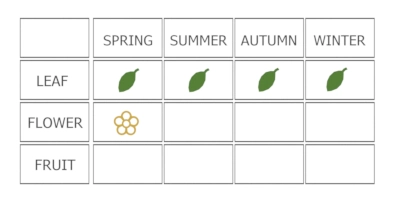
The flowers of Cupressus macrocarpa are small cones. Unlike typical flowers, they do not have a calyx, corolla, stamens, or pistils, instead they have a central axis with scales and bracts.
The male and female cones are separate but exist on the same tree.
Male Cones
The male cones are small and cylindrical, measuring about 3-5mm long and 2mm wide.
When mature, they turn yellow-green and can be easily seen at the tips of branches.
From mid-winter to early spring, these male cones are covered in pollen, which the wind disperses to fertilize female cones on the same or nearby trees.
Female cones
The female cones are ball-shaped (globose) and larger, about 3-4cm (1-1.5 inches) in diameter. They have 8-12, opposite scales that are glossy, wrinkled and have a blunt point at the centre.
Before fertilization, the female cones are tiny and light green with open scales. Then, the scales close up to protect the seeds and gradually become larger, glossy, and brownish-green.
As the seeds mature, after two years, the cone gradually turns reddish-brown to grey and becomes more woody. It can remain in this state for many years until conditions are favourable for the seeds to germinate, like strong heat from a wildfire or a dying branch.
Seeds
The seeds mature after two years between summer and late autumn. At this point, the scales open slightly. In autumn or winter, they open more, and the seeds are finally released.
Each scale contains about 8-15 seeds, each averaging 4-5mm long and 3-4mm wide.
The seeds are dark brown, flattened, and have narrow wings that allow them to be carried by the wind to germinate in new locations.
After releasing the seeds, the cone can remain on the tree for several years.
Interested in low-maintenance plants? I have a special offer for you. Click the button below to download four free guides.
I am pleased to offer you my collection of free drought-tolerant plant guides.

A hand-picked selection of drought-tolerant plants bundled into a collection of exclusive FREE ebooks just for you!
Cupressus macrocarpa Habitat
Cupressus macrocarpa is native to the central coast of California, where it grows on poor, rocky, acidic granite soils and even pure sand. It’s constantly exposed to fog, salt spray, and strong winds which transform the tree into amazing living sculptures.
It can also be found further inland, where it faces more extreme temperatures and less wind. In these conditions, it grows in a more upright, less rugged form and tends to be more vulnerable to diseases.
Cupressus macrocarpa Usage
Ornamental
The Monterey Cypress is admired for its broad, irregular form and vibrant dark green foliage, which creates a striking contrast against coastal landscapes. Its gnarled branches and unique windswept shape provide a sense of texture and movement, making it a dramatic focal point.
The tree’s rugged beauty and resilience in harsh conditions make it a popular choice for coastal gardens and windbreaks.
It can be used in the landscape in the following ways:
- Focal point: Its unique, twisted branches and irregular shape provide a striking visual feature in large gardens or open spaces. As it can grow quite large, make sure that you give it enough room to spread.
- Living walls and windbreaks: Its fast growth rate, dense evergreen foliage, wind resistance and tolerance of light pruning make it ideal for creating a solid living barrier when planted close together. This provides privacy, reduces wind flow, and blocks noise. This video shows some amazing hedges created with Monterey cypress (https://www.youtube.com/watch?v=YrH7Oo-AJzg)
- Coastal Gardens: Its tolerance to salty winds makes it perfect for planting along coastlines, where few other trees thrive.
- Sensory gardens: Its lemony aroma adds a sensory pleasure to the garden. Plant it near paths where people are likely to brush past it and touch it to experience its scent.
It can be combined with the following plants that thrive in similar conditions:
When used as a hedge:
- The grey-green foliage of Lavender, Santolina or Russian sage contrasts with the vibrant dark green foliage of the Monterey cypress.
- The spiky architectural leaves of Yucca, Aloe, or Euphorbias create a striking contrast to the fine-textured foliage of this Cypress.
When used as a focal point:
- The low-growing subshrubs, like some rockroses and thyme, add colour and texture beneath the tall cypress.
- Drought-tolerant ornamental grasses add movement and softness that contrast wonderfully with the sculptural windswept form of the Monterey cypress.
Biodiversity
Monterey Cypress provides a nesting site for birds and a food source for various wildlife species, such as squirrels and other rodents, thereby benefiting wildlife and promoting biodiversity in your garden.
Carpentry
The wood of Monterey cypress is very hard and durable, making it well-suited for small carpentry.
Its resilience to weathering is particularly valuable for outdoor wooden constructions.
Erosion control
These conifers have a deep taproot and are highly resilient to drought, strong winds, salt spray and poor soil making them ideal for planting on slopes to help prevent soil erosion, especially in coastal areas.
Symbolism
The Monterey Cypress represents a living testament to resilience, inspiring those who face adversity.
The Monterey cypress is believed to have inspired Dr. Seuss in his creation of “The Lorax.” The tree’s densely clumped canopy served as a reference for the Truffula trees featured in the story.
Is Cupressus macrocarpa invasive?
It is considered moderately invasive when planted in areas with very favourable conditions. So, before planting, you should check if it is considered invasive in your area.
How to care for Cupressus macrocarpa
Cold exposure
This cypress can tolerate cold weather down to -15ºC (5º F). It can handle this by going into dormancy to conserve energy and resources and slowing down its growth. However, the soil needs to be well drained. Cold, soggy soil can be fatal to it.
While the cypress is still young, it’s more tender and may not resist extremely cold temperatures, so you will need to protect it for the first two winters until it is more established and stronger.
Wrap it with a white fleece during the coldest time of the winter and add a thick layer of mulch around its base to protect the roots from cold temperatures.
Sun exposure
Monterey Cypress can be grown in full sun or partial shade.
It does not thrive well in extremely hot and dry climates. So if this is the case in your area, plant it in a place where it can get shade during the hottest part of the day.
Soil
Monterey Cypress thrives in poor, well-drained soils. It’s best to avoid planting it in damp locations, as it is not tolerant of soggy soil, which can increase the risk of root rot.
It prefers acidic soil but can tolerant mildly alkaline soils.
Watering
Due to its deep taproot, the Monterey cypress is drought tolerant and can go months without water once it is established (about 5 months of drought if the temperature is not too hot).
Once established, it does not need watering, especially if you want to maintain its dense structure. However, if there’s a long period without rain, especially if the winter was dry, you may give it a drink if you see it needs it.
During its first two or three years after planting, it’s essential to water the young cypress regularly. Depending on the soil and the temperatures, you may need to water it once a week, every two weeks or every three weeks.
When watering, be sure to give it plenty of water and allow the soil to soak thoroughly. This helps the water penetrate deeply into the soil, keeping it moist for longer periods and stimulating deeper root growth.
To preserve the soil´s moisture, mulch should be added around the plant’s root area. Preferably, the mulch should be gravel because organic mulch can lead to leaf rot.
Wind Exposure
This cypress has a deep taproot that firmly anchors it, enabling it to withstand constant winds. This adaptation developed in response to the strong winds of its native habitat.
Pruning
Macrocarpa cypress should not be heavily pruned unless removing dead or diseased branches.
If you want to use it as a hedge, you can maintain it compact and neat by trimming it lightly once or twice a year in early spring or late summer, avoiding cuts into older wood. This encourages denser branching and prevents floppy growth.
When to plant Cupressus macrocarpa
The best time to plant Monterey cypress is during its winter dormancy.
If you want to use it as a specimen, provide enough space for it to grow into its distinctive sculptural form.
How to propagate Cupressus macrocarpa
Cupressus macrocarpa can be propagated by seed or by cuttings.
Seed: Later winter to early spring
Since these trees are native to semi-arid and arid areas, where wildfires are common, they have adapted to reproduce in such conditions. Their seed cones usually open after being exposed to intense heat, allowing the tree to quickly reforest areas devastated by fire. So the first step requires you to mimic those conditions.
- Place the cone in a hot place until it opens (oven or radiator)
- Sow the seeds in a well-draining medium. Lightly press the seeds into the soil, just covering them with a thin layer, as the seeds need light to germinate.
- Maintain consistent moisture but not soggy (cover with a plastic lid or bag) and provide indirect light.
- For best germination, maintain a temperature between 10 – 20ºC (50 – 70ºF). The seeds should germinate in five to six weeks or sometimes several months.
- Water from the base of the container (don´t water overhead)
- Once the seedlings have grown a few sets of true leaves, transplant them into individual containers and grow in cold frame during the first winter.
- Harden them to outdoor conditions and then plant into their permanent positions after the last expected frosts.
Stem cuttings: semi-hardwood cuttings in late summer or early autumn.
- Cut the stem just below a leaf node or rip off from the mother branch to take a heel cutting.
- Remove the lower twigs, leaving a few pairs of upper ones intact.
- Plant in a well-draining medium. Keep the medium consistently moist and keep in the shade until rooted.
- Once the roots have developed, transplant the rooted cuttings into individual containers and grow in cold frame during the first winter, exposing them to as much sun as possible.
As not all cuttings will root, take several to increase your chances of success.
Sources for this article
https://powo.science.kew.org/taxon/urn:lsid:ipni.org:names:60451558-2
https://www.treesandshrubsonline.org/articles/hesperocyparis/hesperocyparis-macrocarpa
https://calscape.org/Hesperocyparis-macrocarpa-(Monterey-Cypress)-2