
Stipa calamagrostis (Rough Feather Grass)
Stipa calamagrostis, commonly known as Rough Feather Grass or Spear grass, is a graceful medium-sized semi-evergreen perennial grass that forms a tussock of fine arched green leaves that turn yellow in winter.
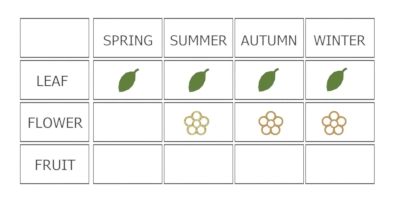
During the summer, tall stems emerge from the foliage topped with feathery panicles of silver-green flowers, which turn golden-beige over the months and into the winter.
It is a hardy, drought-tolerant ornamental grass native to the clearings in the mountains of Morocco, central and southern Europe, Central Asia to Siberia and N. & Central China.

Quick Overview
TYPE

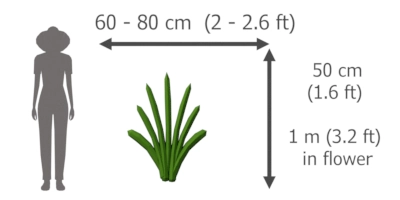
HEIGHT & WIDTH
BLOOM TIME
SUNLIGHT

HARDINESS

DROUGHT TOLERANCE

ORIGIN

Rough Feather Grass Scientific name
- Botanical name: Stipa calamagrostis (STEE-puh kuh-LAM-uh-GROS-tis)
- Family: Poaceae (po-AY-see-eye)
- Common name: Rough Feather Grass, Spear grass, Pheasant Tail Grass or Silver Feather Grass
- Synonyms: Achnatherum calamagrostis (most recent classification)
| Name | Meaning |
|---|---|
| Stipa | Latin word meaning stalk or straw. |
| calamagrostis | From the Greek words Kalamos which means “reed”, and argos meaning “field or pasture” (a Greek word for agriculture referring to its habitat) |
How to identify Stipa calamagrostis
Plant
Stipa calamagrostis is a medium-sized semi-evergreen perennial grass that forms a dense tuft of arching, narrow green leaves that turn yellow in the winter.
It slowly spreads around the outside through its short, underground stems (short rhizomatous). Eventually, the centre will die out creating a “doughnut” effect, indicating it is time to divide and replant it.
In summer, tall, cylindrical stems grow straight up from the plant. At the top, these stems slightly bend over because of the weight of the fluffy flower clusters, creating a fountain-like appearance.
These flower clusters start out silver-green but change to a golden-beige colour as they get older.”
Stipa calamagrostis is a medium-sized ornamental grass. Its foliage is around 50cm (1.6 ft) high, and the flower stem is 1 m (3.2 ft). The width is around 60 – 80cm (2 – 2.6 ft).
Stem
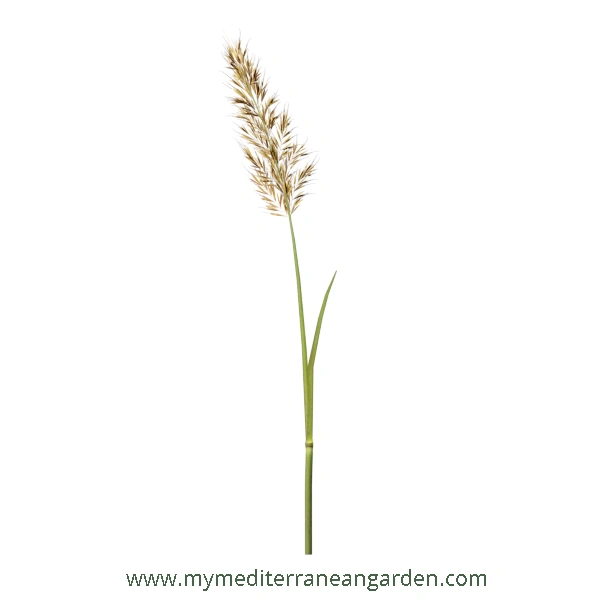
Stipa calamagrostis has tall, grassy, upright to arching flower stems. These round and hollow stems emerge from the foliage during the summer. They’re smooth, green, and hairless.
Along the stem, 5 to 8 leaves are wrapped around it, and at the top, a cluster of hanging flowers (spikelets) remains until winter, providing year-round interest to the garden.
The stem has cup-shaped nodes along its length.
Leaf
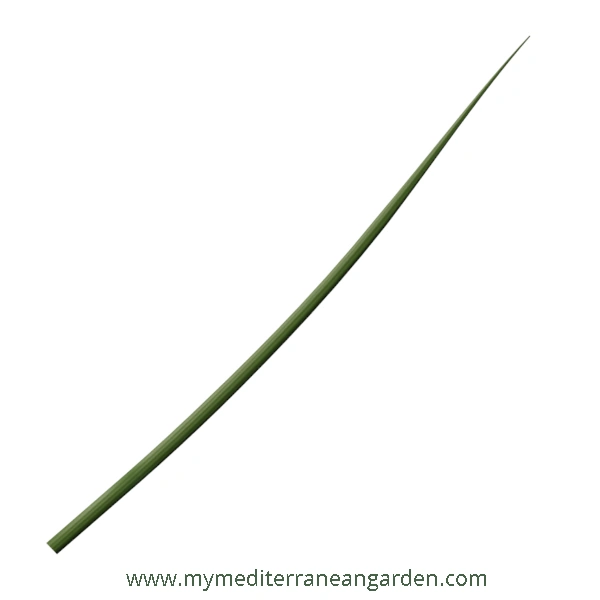
The leaves are narrow, leathery, and green, turning yellow in the winter. There are two types of leaves:
The basal leaves (bottom leaves): These grow from the base of the plant and have a sheath around the stem. The leaf itself is rounded on the back and smooth. It is hairless, although sometimes it might have tiny hairs on the edges (cilia).
The top of the leaf blade is long and thin. It’s flat, pointed at the tip (acute), and smooth on the underside but rough on the top (scabrid).
The basal leaf is 20 – 30 cm (0.6 – 1 ft) long and 0.6 – 3.7 mm (0.2 to 1.4 inches ) wide.
The stem leaves (top leaves): There are 5 to 8 leaves further up the stem, similar to the ones at the bottom, with a slightly bigger ligule ( a thin outgrowth at the junction of the leaf ) and usually longer than the basal leaves, 30-37cm (1 – 1.2 ft) long.
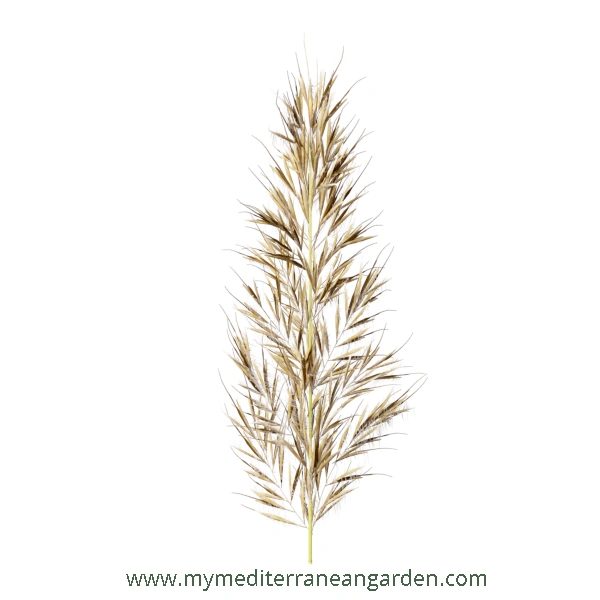
Flower
The inflorescence is a panicle 8 to 22 cm (3 to 9 inches) long with a lanceolate (lance-shaped) outline. The flowers (spikelets) are packed pretty close together, with a rough central stem and 4 to 7 branches per level. These branches are upright, spread out and have many small flower spikes.
The spikelets have a floret and a long awn and are protected with the glumes.
When the flowers mature and open, we can easily observe the glumes.
The glumes are external bracts with slightly different sizes surrounding the spikelet. They are long and narrow, shaped like a lance. They are thin and translucent with a green tint in the middle.
Interested in low-maintenance plants? I have a special offer for you. Click the button below to download four free guides.
I am pleased to offer you my collection of free drought-tolerant plant guides.

A hand-picked selection of drought-tolerant plants bundled into a collection of exclusive FREE ebooks just for you!
Stipa calamagrostis Habitat
Stipa calamagrostis can be found on rocky shelves, loose rock, gravel, river beds, slopes, and open fields, usually on limestone. This plant grows at altitudes of 500 to 2000 meters (1640 to 6500 feet).
Stipa calamagrostis Usage
Ornamental
Rough Feather Grass brings a touch of magic to gardens. Its feathery plumes are moved by the slightest breeze and illuminated beautifully by the low evening light and early morning sun.
It provides year-round interest, with flower heads that begin as silver-green and turn golden-beige as they mature. The foliage also changes color throughout the year, turning green in spring and summer and warm gold in autumn and winter.
The visual appeal, together with its low need for care, make it a popular choice for low-maintenance gardens.
It can be used in the landscape in the following ways:
- Focal point: Its graceful stems and feathery flower heads make it an excellent focal point in the garden. Its striking appearance draws the eye and adds visual interest to the landscape. When illuminated by early morning or late afternoon sunlight, it creates a dramatic effect, especially when it is backlit. Surround it with lower-growing plants to highlight its vertical form.
- Texture and movement: The fine, pendulous panicles of Rough Feather grass bring texture and movement to garden designs. Their delicate, feather-like appearance contrasts gently with surrounding plants and hard surfaces while also introducing movement with even the lightest breeze.
- Naturalistic plantings: Stipa calamagrostis is often used in naturalistic or prairie-style plantings to create a sense of movement and wildness. Its graceful form makes it well-suited to informal garden designs.
- Containers: Its compact form makes it suitable for pots or planters. Place it on a patio or balcony to enjoy its shimmering plumes up close.
- Rock gardens: Its drought tolerance suits it for rock gardens or xeriscaping. The feathery flower heads create an interesting contrast and soften the hard rock surfaces.
Biodiversity
Stipa calamagrostis provides habitat and food sources for various wildlife species, including birds and insects, making it beneficial for promoting biodiversity in your garden.
Dried Flower Arrangements
The long-lasting seed heads of Rough Feather Grass, can be picked in summer and used in floral arrangements, adding texture and interest to indoor decorations.
Erosion Control
The dense clumps of Stipa calamagrostis can help stabilize soil on slopes and embankments, making it useful for erosion control in landscaping projects.
How to care for Stipa calamagrostis
Cold exposure
This plant can tolerate cold weather down to -15ºC (5º F) or less. But only if the soil is well drained. Cold, soggy soil can be fatal to it.
While the plant is not yet established, you may want to add a thick layer of mulch around the plant’s base to protect the roots from cold temperatures. It´s preferable to use gravel mulch because organic mulch will stay humid and can cause the plant to rot.
Sun exposure
Rough Feather grass prefers full sun, but it can tolerate some light-dappled shade.
In extremely hot climates or areas with intense sunlight, it’s beneficial to shield plants from the harsh afternoon sun to avoid leaf damage. Offering partial shade during the hottest part of the day can shield the plant from excessive heat and strong sunlight.
Soil
Rough Feather Grass thrives in poor, well-drained soils, particularly those with a gritty, rocky texture. It’s best to avoid planting it in damp locations, as it is not tolerant of soggy soil, which can increase the risk of root rot.
If your area becomes waterlogged, you may need to keep the entire root ball above ground level and fill in with a raised mound of sandy soil, sloping gradually away from the plant’s base.
It can tolerant most types of soil PH from mildly acidic to mildly alkaline soils.
Avoid fertilizing the soil if you need the plant to remain robust and better equipped to handle extreme temperatures. Also, in richer soils, this plant grows floppy and weak.
Watering
Rough Feather Grass is very drought tolerant and can go for months without water once it is established (about 4 months of drought if the temperature is not too hot).
Once established, it does not need watering. However, if there’s a long period without rain or very hot weather, you should give it a drink.
During its first year after planting, it’s essential to water the young plant regularly. Depending on the soil and the temperatures, you may need to water it once a week, every two weeks or every three weeks.
When you water the plant, make sure to give it plenty of water, allowing the soil to get a good soak. This way, the water can sink deep into the soil, keeping it moist for longer periods.
To preserve the soil´s moisture, mulch should be added around the plant’s root area. Preferably, the mulch should be gravel because organic mulch can lead to leaf rot.
Pruning
Cut Stipa calamagrostis back to about 15 cm (0.5 ft) in late winter. By then, you will already notice some fresh green growth emerging.
After that, comb through the leaves with your fingers to remove the dead material and give it some “breathing space”. Gently remove the dead leaves, leaving the crown with only the fresh green leaves.
Alternatively, you can also rake it, which is a faster way of doing this. However, it may damage the new leaves, and you will not get such a nice result. It all depends on how much time you have to do this task.
When to plant Stipa calamagrostis
The best season to plant is typically spring or autumn, depending on your climate. You should avoid planting during periods of extreme temperatures.
If you have mild weather where you live, it’s best to plant in the autumn to give it time to develop the roots during the cooler months before the arrival of the hot summer. In case of very cold winters, it’s better to wait until spring when the risk of frost has passed and the soil is warmer. That way, the plant can have a better chance to grow well and be healthy.
How to propagate Stipa calamagrostis
Stipa calamagrostis can be propagated by seed or by division.
Division: Mid-Spring to early summer
- Dig up the mother plant clump.
- Shake off the excess soil to make it easier to divide.
- Divide the clump into good-sized sections. Depending on the size of the clump, use a sharp knife, a spade, or even a saw.
- Replant the divisions into the garden.
Note: This grass should be divided approximately every three years to maintain its vigour. A clear sign it needs dividing is when it forms a doughnut shape due to dieback in the centre of the plant.
Seed: Early spring to early summer
- Sow the seeds in a well-draining medium. Lightly press the seeds into the soil, just covering them with a thin layer, as the seeds need light to germinate.
- Maintain consistent moisture but not soggy (cover with a plastic lid or bag) and provide indirect light.
- For best germination, maintain a temperature around 15 to 18ºC (60 to 65ºF). Germination should take 2 to 4 weeks, but it can also be erratic and take several months.
- Water from the base of the container (don´t water overhead)
- Once the seedlings have grown a few sets of true leaves, transplant them into individual containers and grow in a cold frame during the first winter, or harden them to outdoor conditions and then plant them into their permanent positions after the last expected frosts.
Sources of information used for this article
Sources
Article from Kew
Article from Jardin-sec
Article from Flora of Italy


