
Tulbaghia violacea (Society Garlic)
Tulbaghia violacea, commonly called Society Garlic or Pink Agapanthus, is an evergreen, herbaceous perennial that forms a clump of narrow, semi-succulent green leaves.
During summer and autumn, tall stalks rise above the foliage, topped with clusters (umbels) of tubular star-shaped violet-pink flowers that sway gently in the breeze and add a soft airy touch to the garden.
It is a hardy, drought-tolerant herbaceous perennial (type geophyte) native to South Africa.

Quick Overview
TYPE

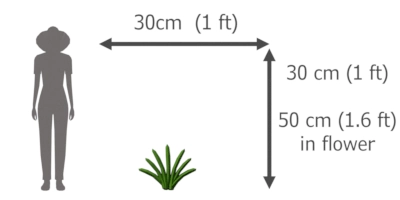
HEIGHT & WIDTH
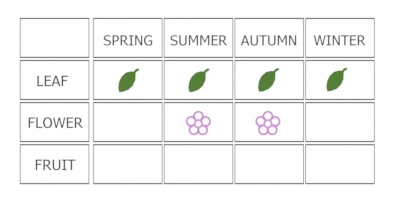
BLOOM TIME
SUNLIGHT

HARDINESS

DROUGHT TOLERANCE

ORIGIN

Society Garlic Botanical name
- Botanical name: Tulbaghia violacea (tul-BAGH-ee-uh vy-oh-LAY-see-uh)
- Family: Amaryllidaceae (am-uh-ril-id-AY-see-ee)
- Common name: Society Garlic or Pink Agapanthus
| Name | Meaning |
|---|---|
| Tulbaghia | Named after Ryk Tulbagh governor of the Cape of Good Hope (South Africa) in the 18th century. |
| violacea | From the Latin word “violaceus” meaning “violet-coloured“. Describing the violet-pink colour of the flowers. |
How to identify Tulbaghia violacea
Plant
Tulbaghia violacea is a medium-sized herbaceous perennial. It is usually evergreen but in colder climates, it loses its leaves, however, they sprout back when the temperature warms in early spring.
It forms a dense tuft of semi-fleshy, narrow green leaves that are erect or slightly arching. Over time, the plant spreads gradually through its horizontal underground stems (rhizome) forming a ground cover.
From early summer to mid-autumn, the plant produces tall stalks topped with clusters of small, star-shaped pink flowers with a tubular form.
Its foliage is around 30 cm (1 ft) high, and the flower stem 50 cm (1.6 ft). The width is around 30 cm (1ft).
Stem
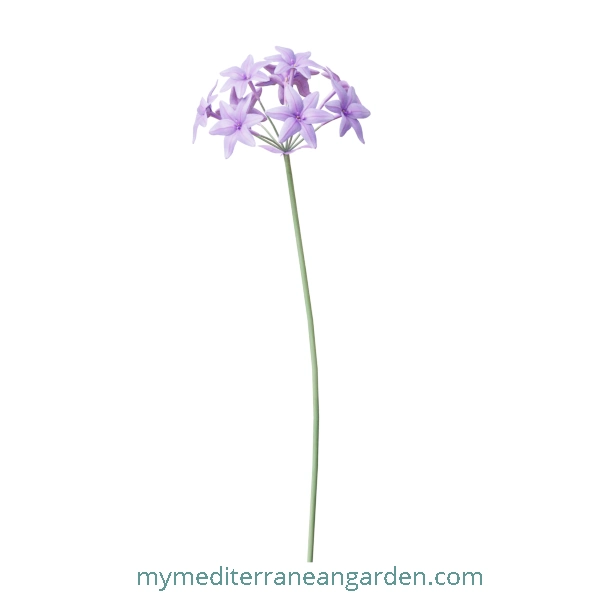
Tulbaghia violacea has tall, upright flower stems that rise above the foliage for several months, typically from early summer to mid-autumn, with year-round blooms in warmer climates.
The stems are smooth, shiny, green, and they don’t have any hairs.
At the top of each stem sits an umbel of small, star-shaped pink flowers.
The stems are around 50cm (1.6 ft) tall.
Leaf
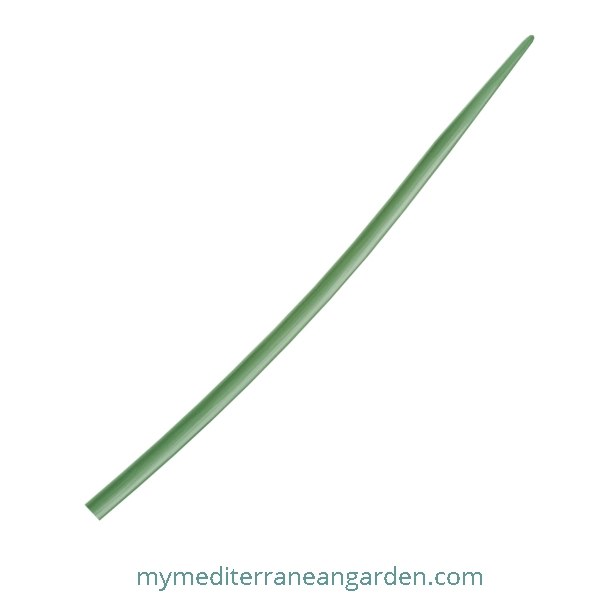
The leaves are green, smooth, hairless and slightly fleshy. When crushed, they smell like garlic.
They grow upright and slightly arching from a rhizome shoot. Each shoot has 4 to 9 leaves arranged in a rosette. As the rhizome spreads, the foliage clump grows larger.
The leaf is entire with a linear shape that tapers to a pointed yet slightly rounded tip, The edges are slightly rolled upward.
The length is about 30 cm (1 ft) and the width 0.5 cm (0.2 inches).
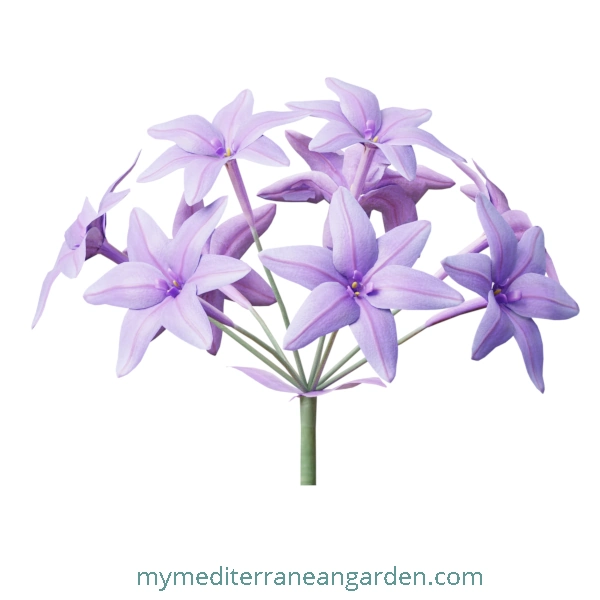
Flower
The inflorescence is a group of flowers (8 to 20) arranged in an umbel (pedicels originating from the same point) at the tip of the stem. The umbel is around 7cm (2.7 inches) in diameter.
Each flower is star-shaped, beginning as a tube that opens into six-pointed violet-pink petals, with a darker stripe down the centre of each petal.
The size of each individual flower is around 2 cm (0.8 inch) in diameter.
The flowers are slightly scented and bloom from early summer to mid-autumn.
Interested in low-maintenance plants? I have a special offer for you. Click the button below to download four free guides.
I am pleased to offer you my collection of free drought-tolerant plant guides.

A hand-picked selection of drought-tolerant plants bundled into a collection of exclusive FREE ebooks just for you!
Tulbaghia violacea Habitat
Tulbaghia violacea can be found in rocky grasslands, forest margins and stream banks.
It can grow from sea level up to an elevation of around 1200 metres (4000 feet)
Tulbaghia violacea Usage
Ornamental
Society garlic is a charming perennial that forms a dense clump of slender, fleshy green foliage that looks lush during hot summers and remains all year-round (except for very cold climates).
During several months, elegant flower stalks rise above the foliage, displaying clusters of delicate, violet-pink, star-shaped flowers that look like a fireworks display. These tall stems create an airy presence in the garden, gently swaying in the slightest breeze.
The visual appeal, together with its low need for care, make it a popular choice for low-maintenance gardens.
It can be used in the landscape in the following ways:
- Focal point: Its graceful stems with the showy yet delicate flower heads make it an excellent focal point in a small garden such as a patio or balcony. Its striking appearance draws the eye and adds visual interest to the area.
- Mass plantings: Plant in groups to create a dramatic, flowing sea of green, grass-like foliage with graceful flower stems reaching up to display vibrant violet-pink star-shaped blooms. This plant is very effective for the edges of pathways and makes a great groundcover for difficult areas since it grows well in poor soil and needs very little water.
- Texture and movement: Place in areas where it can catch the wind. The flowers’ delicate, airy movement as they sway in the breeze adds a dynamic, lively touch to the landscape.
- Rock gardens: Its drought tolerance makes it ideal for rock gardens or xeriscaping. The airy flower heads create an interesting contrast and soften the hard rock surfaces.
- Coastal gardens: Being salt tolerant it is a good choice for a coastal garden.
- Containers: It works well in pots and containers, adding a splash of colour and movement to patios, balconies, and entryways.
It can be combined with the following plants:
Stipa tenuissima, stipa barbata, festuca glauca, Lemon Thyme, Lavender Cotton, Lambs Ears, Artemisia alba Canescens, English Lavender. These plants complement or contrast its delicate, airy texture and thrive in similar conditions.
Medicinal Use
Tulbaghia violacea (mainly the leaves and bulbs) has been traditionally used in the native local communities to treat various health conditions, including fevers, colds, asthma, and tuberculosis.
Scientific studies have also demonstrated its medicinal properties.
Culinary Use
Society garlic, like other garlic plants, is edible. It can be eaten raw or cooked.
The leaves and bulbs can be used like garlic and onions, adding a robust flavour to cooked meals.
The flowers have a milder flavour and are used for decorating soups and salads.
However, the plant should be consumed in moderation, as its prolonged and excessive use has been reported to cause abdominal pain and inflammation.
Biodiversity
Tulbaghia violacea attracts bees and butterflies, enhancing your garden’s biodiversity. Unlike other species in the Tulbaghia family that attract moths at night, this plant draws in daytime pollinators.
Flower Arrangements
Tulbaghias have long-lasting cut flowers so they can be used for fresh flower arrangements in a vase.
How to care for Tulbaghia violacea
Cold exposure
This plant can tolerate some light frosts and cold weather down to -10ºC (14º F), but only if the soil is well drained. Cold, soggy soil can be fatal to it.
While the plant is not yet established, you might want to add a thick layer of mulch around the plant’s base to protect the roots from cold temperatures. It´s preferable to use gravel mulch because organic mulch will stay humid and can cause the plant to rot.
Sun exposure
Society Garlic prefers full sun, although he can also tolerate some shade. However, it produces more flowers when grown in full sun.
In extremely hot climates or areas with intense sunlight, it’s beneficial to shield plants from the harsh afternoon sun to avoid leaf damage. Offering partial shade during the hottest part of the day can shield the plant from excessive heat and strong sunlight.
Soil
Society Garlic does well in poor soils, but it blooms more abundantly if you enrich the soil with some organic matter.
It prefers moist, well-drained soil, so avoid planting it in damp areas. The plant is not tolerant of soggy conditions, which increases the risk of root rot.
If your area becomes waterlogged, you may need to keep the entire root ball above ground level and fill in with a raised mound of sandy soil, sloping gradually away from the plant’s base.
It can tolerant most types of soil PH from mildly acidic to mildly alkaline soils.
Watering
Society garlic is very drought tolerant and can go for months without water once it is established (about 5 months of drought if the temperature is not too hot).
Once established, it requires little to no watering. However, to encourage abundant blooms during the flowering season, it will benefit from occasional moisture.
During its first year after planting, it’s essential to water the young plant regularly. Depending on the soil and the temperatures, you may need to water it once a week, every two weeks or every three weeks.
When you water the plant, make sure to give it plenty of water, allowing the soil to get a good soak. This way, the water can sink deep into the soil, keeping it moist for longer periods.
To preserve the soil´s moisture, mulch should be added around the plant’s root area. Preferably, the mulch should be gravel because organic mulch can lead to leaf rot.
Pruning
Tulbaghia violacea does not require pruning, but in spring, you may need to clear away any frost-damaged foliage.
Additionally, removing spent flower stems can help maintain a neat appearance and encourage new blooms.
If you live in an area with harsh winters, consider cutting the foliage down to about 3 cm and covering it with a 6 cm layer of mulch to protect it from cold and frost.
When to plant Tulbaghia violacea
Depending on your climate, the best season to plant is typically spring or autumn. Avoid planting during periods of extreme temperatures.
If you have mild weather where you live, it’s best to plant in the autumn to give it time to develop the roots during the cooler months before the arrival of the hot summer. In case of very cold winters, it’s better to wait until spring when the risk of frost has passed and the soil is warmer. That way, the plant can have a better chance to grow well and be healthy.
How to propagate Tulbaghia violacea
Tulbaghia violacea can be propagated by seed or by division.
Division: late spring or early autumn
- Dig up the mother plant clump.
- Shake off the excess soil to make it easier to divide.
- Divide the clump into good-sized sections. Depending on the size of the clump, use a sharp knife, a spade, or even a saw.
- Replant the divisions into the garden.
To keep the plant healthy and blooming well, it should be divided every three to four years.
Seed: Early spring to early summer
- Sow the seeds in a well-draining medium.
- Maintain consistent moisture but not soggy (cover with a plastic lid or bag) and provide indirect light.
- Maintain temperature around 15 to 18ºC (60 TO 65ºF) for best germination.
- Water from the base of the container (don´t water overhead)
- Once the seedlings have grown, transplant them into individual containers and grow in cold frame during the first winter, or harden them to outdoor conditions and then plant into their permanent positions after the last expected frosts.
Other posts you may also like
- Stipa Grasses
- Lavender vs Lavandin
- Oregano in Pots – A Comprehensive Guide
- 7 Types of Oregano for Herb and Ornamental Gardens
- Dianthus in Pots – A Comprehensive Guide
Sources for this article
Article from Kew
Article from Jardin-sec
Article from North Carolina Extension Gardener